Heard of the silver economy? It refers to services and products for people over 70. Gen X, born from 1960 to 1980, is approaching this demographic milestone. They’ll be the first digitally-savvy generation to reach 70.
Estimates indicate that the 70+ age group will comprise over 1 billion individuals, or 13% of the global population by 2025. Beyond their sheer numbers, Generation X seniors will also benefit from increased longevity thanks to medical advancements.
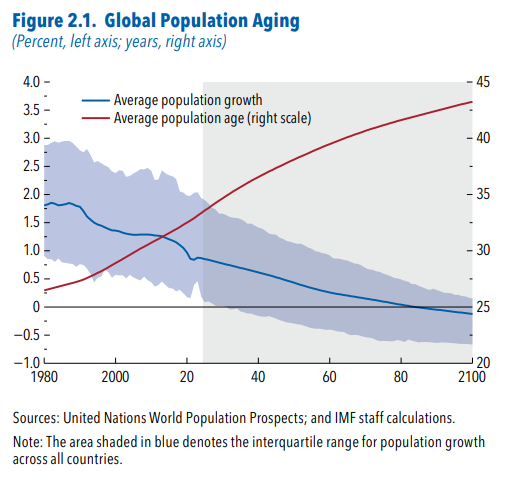
The chart below, published in the International Monetary Fund’s (IMF) World Economic Outlook this April, indicate a rise in the global average age alongside a declining population growth rate.
Gen X also experienced some of the first significant drops in fertility rates. In the 1990s, countries like Germany, Spain, and Italy reported fertility rates of approximately 1.5 births per woman, well below the replacement rate of 2.1.
This is a group that’s aging without children, meaning they won’t be able to rely on offspring for elder care. This creates significant opportunities for products and services tailored to this population.
Most of the current 70+ demographic finds interacting with AI assistants challenging. But Generation X seniors will be much more digitally fluent, creating opportunities for devices and software that support them through cognitive decline. Wearables, now primarily sport-oriented, are expected to expand into the 70+ market.
While the pharmaceutical and healthcare industries are the clear beneficiaries of this demographic shift, numerous other sectors are also well-positioned to explore this trend.
In the construction sector, for instance, the retrofitting of homes and public spaces to adapted them for seniors is expected to generate significant revenue. Given the inherent mobility and cognitive issues, this generation will greatly benefit from self-driving cars, likely becoming a key growth driver for the industry.
Tailored entertainment options for this audience (who, consistent with older generations, will likely prioritize nostalgia) are poised for growth. Similarly, the tourism sector will see more destinations adapting their services to attract the 70+ cohort.
Such a significant demographic movement is set to affect nearly all areas of the economy. Businesses must use Market and Competitive Intelligence (M&CI) and plan strategically to capitalize on these opportunities without being caught off guard.