We have frequently worked with clients operating in commoditized or nearly saturated markets. These companies find themselves pushed to lower prices and run promotions to attract customers. However, as Starbucks founder Howard Schultz famously once said: “Cutting prices or putting things on sale is not sustainable business strategy.”
To survive, these businesses must reinvent themselves and aggressively pursue differentiation. At least, in commoditized markets you don’t need disruptive innovation to achieve differentiation. At times, a simple change is enough for the customer to perceive higher value in a product or service compared to competitors.
For starters, when a company faces this blood-red ocean, it must deeply understand the market. Analyzing competitors using Market and Competitive Intelligence (M&CI) techniques is essential in order to identify each competitor’s strengths and weaknesses and discover gaps for the company to explore and win market share.
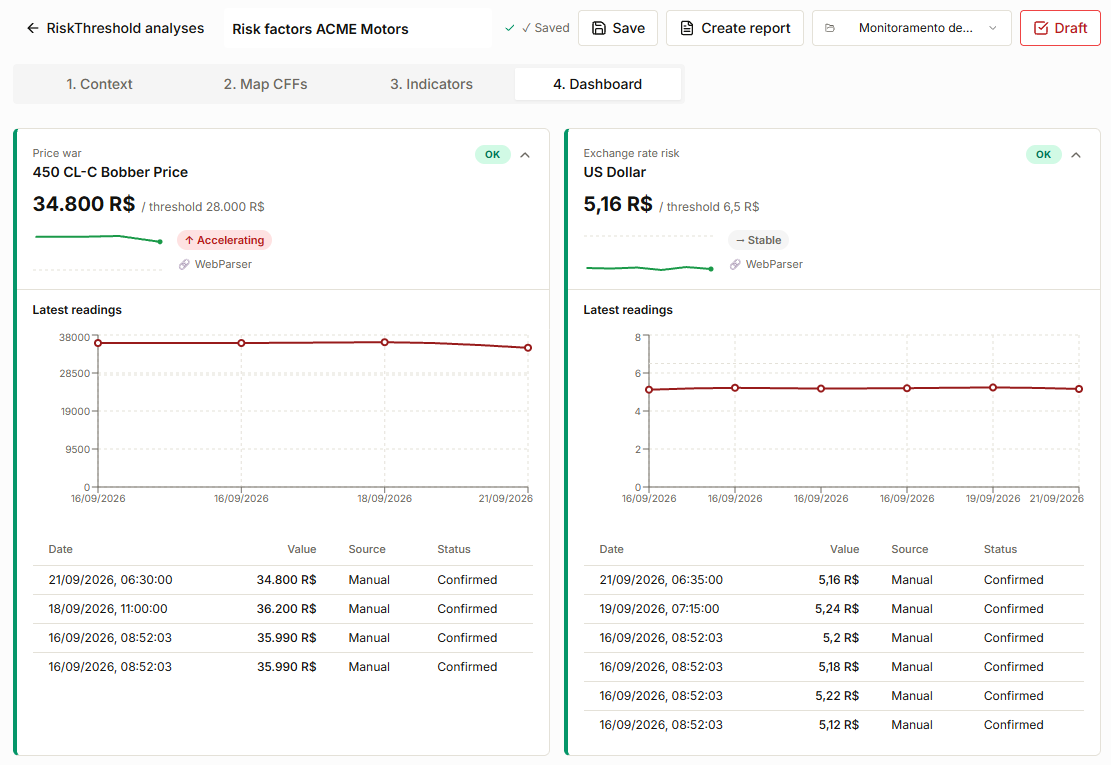
Typically, in saturated or nearly saturated segments (where supply almost exceeds demand), customers show low brand loyalty. They readily change suppliers and look for the lowest prices. Consistently, a competitor will begin a price war, compressing margins for all market players.
To avoid this trap, there are alternatives that help shift the balance in your favor:
Market segmentation – Not all clients are equal, and some may perceive greater value in the product or service that the company provides. Market and Competitive Intelligence can aid in identifying these niches through surveys, focus groups, and in-depth interviews.
Microniches – The largest customer segment isn’t always the most profitable. A more targeted, smaller niche may have specific needs, with customers willing to pay a higher price for products that satisfy those needs
Product adjustment – At times, the offer does not satisfy the customer. In those situations, customer feedback must be considered to improve products and distinguish them from the competition.
Latent needs – Profitable niches emerge when a company identifies needs or problems that competitors overlook or are unable to address. Qualitative research, gathering feedback from the company’s own customer base, and even monitoring reviews of competitors’ products/services can be used to identify these opportunities.
Exploring trends – All markets, including the most traditional, are dynamic. Understanding changes and getting ahead of trends helps companies in saturated markets to stand out. M&CI can also assist in this task by highlighting trends that are not always visible.
Once the differentiation opportunity is identified, it is important that the company tests and validates it. This usually requires changing the sales pitch, advertisements, marketing, and communication. It also demands developing a viable prototype and gathering feedback on that prototype.
If everything goes well and the opportunity proves to be genuine, the company cannot afford to relax and assume that differentiation is permanent. Newton’s third law already stated that for every action there is an equal and opposite reaction. So, competitors will become aware of the same opportunity and attempt to enter the same niche or segment.
Therefore, it is necessary to monitor the competition, customers, trends, and keep the company ready to change when the market goes stale again. It may seem challenging, and it is, but it gets easier from the moment leaders and the team understand that only those who reinvent themselves survive in a highly competitive environment.

Databases provide valuable information for the start of intelligence studies