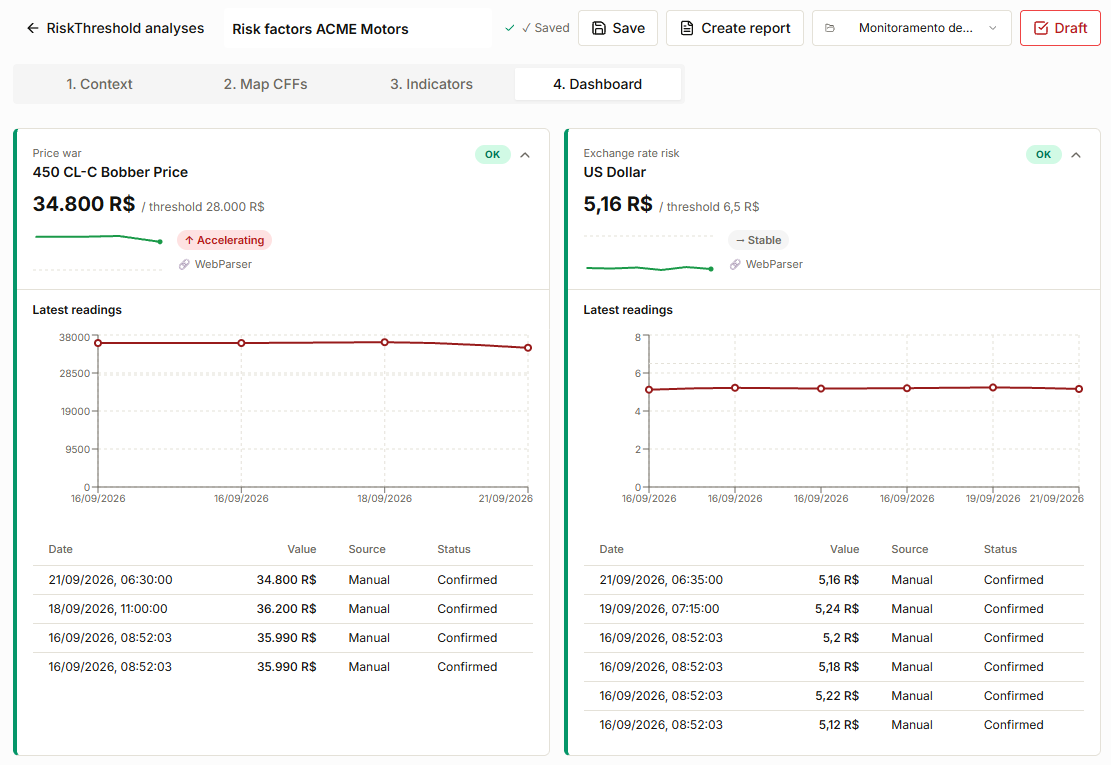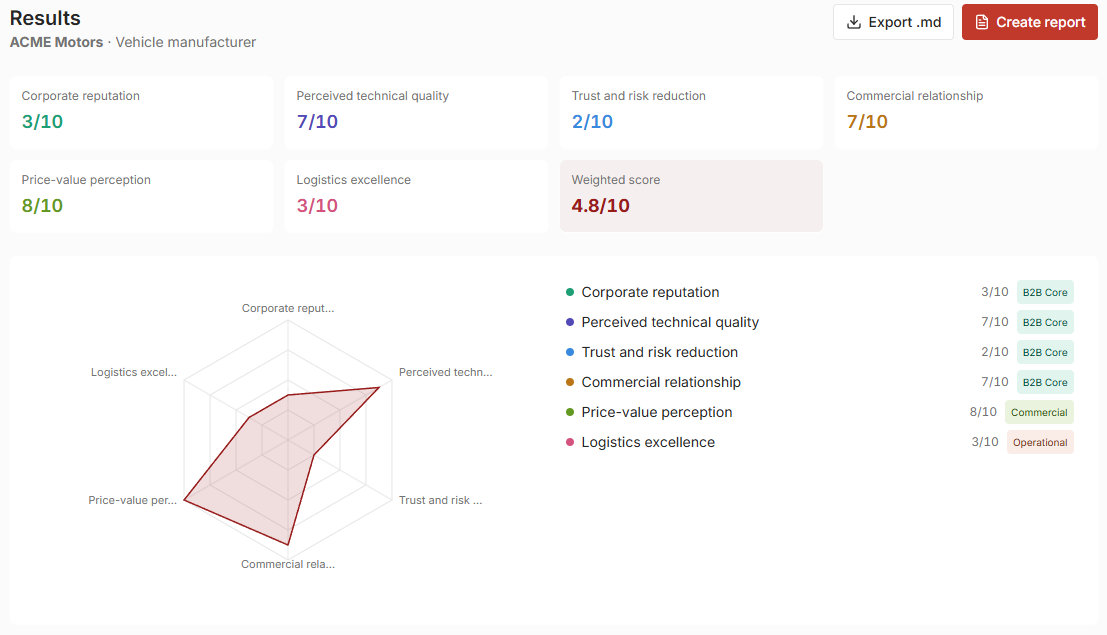
Have you ever heard of an analytical technique called Indicator Monitoring? This Market and Competitive Intelligence (M&CI) method is used in conjunction with Scenario Analysis to identify which of the projected scenarios is most likely to materialize.
When conducting Scenario Analysis, our analysts typically present three or four alternatives—such as “most likely,” “least likely,” “highest impact,” or “riskiest”—depending on the environment being analyzed.
The advantage of pairing Indicator Monitoring with Scenario Analysis is that by tracking specific parameters, analysts can adjust the probabilities of these scenarios coming to fruition. This also extends the shelf life of a Scenario Analysis by adjusting findings as the competitive landscape evolves.
For example, suppose a local competitor has just been acquired by a global player. To mitigate the risk of being blindsided by strategic shifts, you commission a Scenario Analysis from your intelligence team (or your M&CI service provider).
One of the scenarios projects that the local company will be used as a platform for the global player to expand its footprint in Latin America. In this case, one of the indicators confirming this move would be the hiring of more professionals in neighboring countries or professionals in Brazil fluent in Spanish.
In this example, the indicator perfectly fits the five key parameters for effective Indicator Monitoring:
Collectable and Observable – The indicator must be available for collection through secondary or primary sources. For indicators subject to variation, it is crucial that data collection can be tracked over time to observe changes.
Valid and Relevant – It must accurately indicate what the analysis intends to validate and remain a relevant factor in signaling that change.
Reliable – The collection and monitoring process must maintain a high degree of precision in measuring changes, using consistent sources and measuring the same parameters.
Stable – An indicator that fluctuates due to outside factors, such as seasonal economic shifts, can lead to false conclusions.
Unique – The indicator should measure a single variable and be indicative of a single hypothesis. If an indicator’s variation can be explained by multiple hypotheses, it loses its effectiveness.
For this type of monitoring, we use a dedicated matrix for each scenario, even if certain indicators overlap across different scenarios. This allows us to accurately assess the impact of each indicator on the probability of a specific scenario materializing.
What Is Scenario Analysis?
Scenario Analysis (or Scenario Planning) is a comprehensive technique that enables proactive planning for future changes. It analyzes numerous variables that could impact the business and different futures that might unfold, such as new competitors entering the market or increased government regulation. Scenario Analysis allows companies to develop advance strategies for different future scenarios, streamlining decision-making and response times.
Do You Want to Apply this Technique in Your Organization?
If you are looking to implement this technique within your company, contact us today to start a conversation.
The Limitations of Big Data
Big Data can significantly contribute to Market and Competitive Intelligence. However, it also has limitations, particularly in niche markets or for products with a limited online presence.
Learn More About Indicator Monitoring
Explore the five most common types of monitoring powered by Market and Competitive Intelligence.