Many business leaders make the mistake of seeing markets as static environments. They only realize change is happening when it hits their doorstep, shaking the stability of their company.
How often have we heard managers say their products are one of a kind? New competitors, new products, new rules, new habits. Change comes in countless forms.
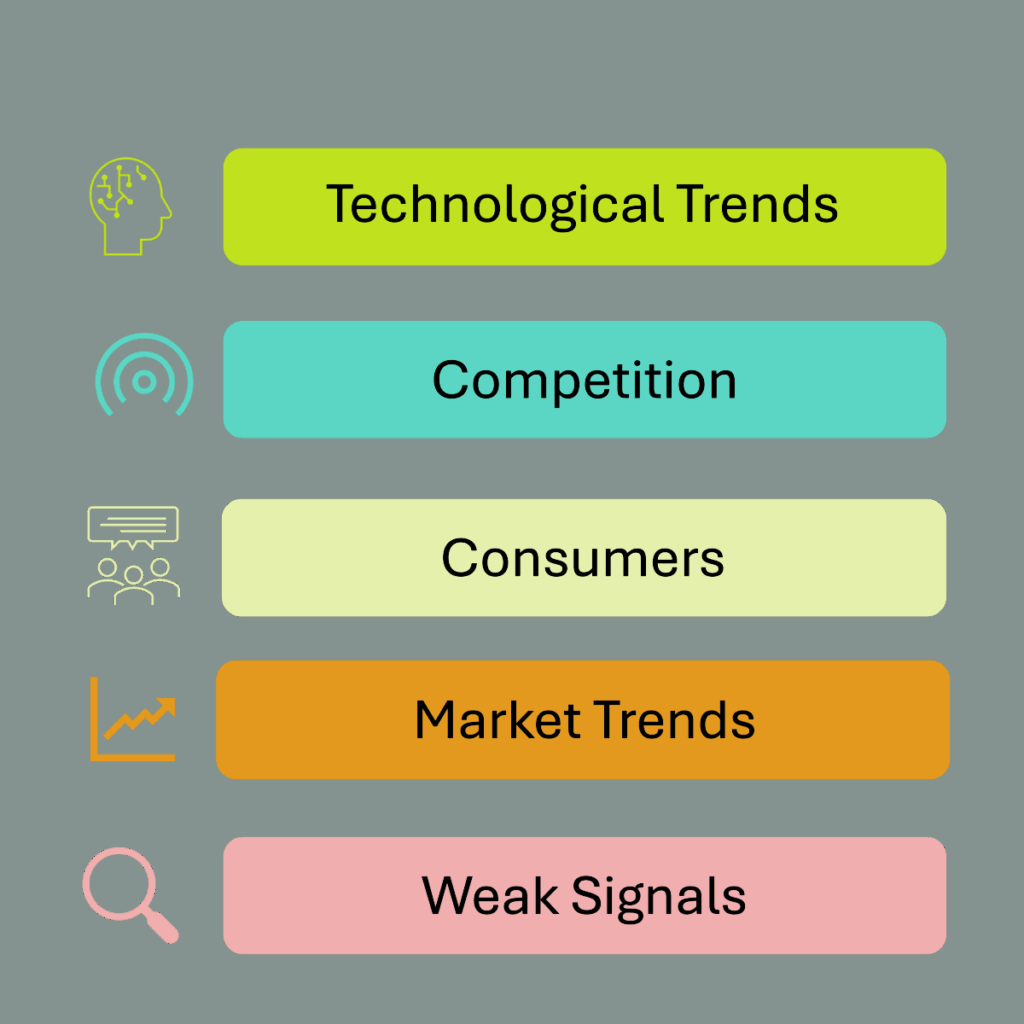
That’s why successful organizations invest in trend monitoring. Explore the five most common types of monitoring powered by market and competitive intelligence:
👉 Market Trends
Keeping up with emerging trends in your industry helps you anticipate shifts, adjust your strategy, and move ahead of the competition. This type of monitoring includes not only consumers and competitors but also the broader forces shaping your market.
👉 Technological Trends
Your competitors are betting on innovation. Are you keeping track? Monitoring technological trends means researching the latest developments and exploring patents to uncover innovation opportunities.
👉 Weak Signals
Ongoing monitoring enables companies to spot early signs of change, before they become full-blown trends. These insights allow organizations to adapt faster than the competition.
👉 Consumers
Knowing what your customers expect, what attracts them to other brands, and how their needs evolve is key to maintaining a relevant and agile strategy.
👉 Competition
Monitoring competitors should be a core business practice. It not only reveals opportunities to strengthen your operations but also helps you anticipate competitive moves before they happen.
Weak
Signals
Analysis
In the realm of Competitive Intelligence, one of the most intriguing techniques capable of yielding exceptional results is the analysis of weak signals.